> For the complete documentation index, see [llms.txt](https://academy.pentaho.com/llms.txt). Markdown versions of documentation pages are available by appending `.md` to page URLs; this page is available as [Markdown](https://academy.pentaho.com/pentaho-data-integration/data-integration/data-sources/databases/cruid.md).
# CRUID
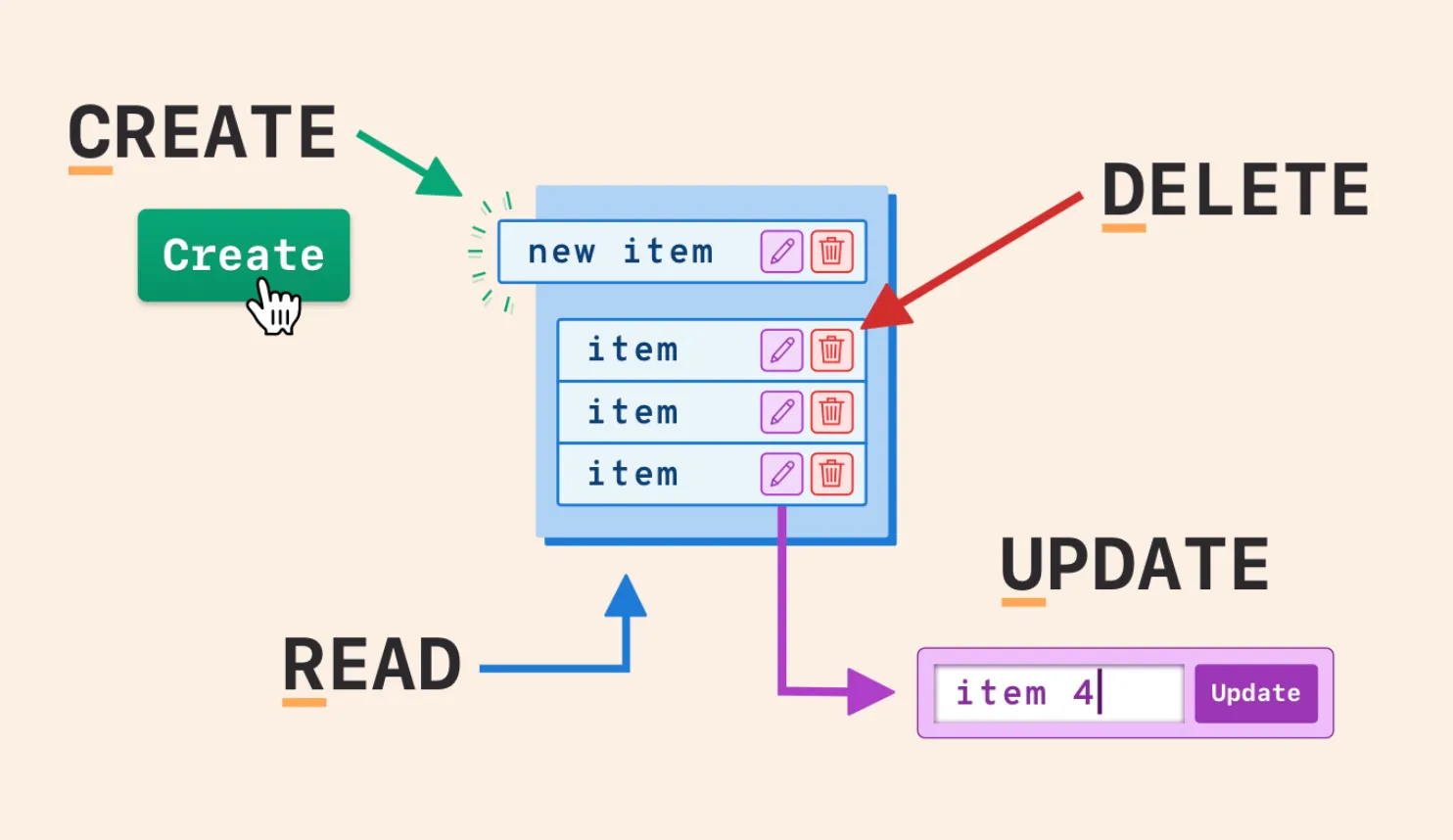
CRUID database operations are a set of five basic functions that allow us to manipulate data in a persistent storage system, such as a relational database ..
{% hint style="info" %}
#### Database Operations
Steel Wheels utilizes a straightforward Enterprise Resource Platform (ERP) to manage various Business Units (BUs) including Human Resources, Marketing, Finance, Supply Chain, and others. The upcoming workshops will demonstrate steps that illustrate CRUD (Create, Read, Update, Insert, Delete) operations:
**Create** operations add new records to a database. This might involve inserting a new customer profile, product listing, or transaction record. In SQL, this is typically done using the INSERT statement, while in NoSQL databases, it might use methods like insertOne() or save().
**Read** operations retrieve existing data from the database. This could be fetching a single record by its unique identifier or querying multiple records based on specific criteria. SQL uses SELECT statements for this purpose, while NoSQL databases might use find() or get() methods.
**Update** operations modify existing records in the database. This could involve changing a customer's address, updating a product's price, or modifying any stored information. SQL uses the UPDATE statement, while NoSQL databases might use methods like updateOne() or save() on an existing document.
**Delete** operations remove records from the database. This might involve permanently removing a user account or archiving old data. SQL uses the DELETE statement, while NoSQL databases typically use methods like deleteOne() or remove().
{% endhint %}
CRUID
---
# Agent Instructions
This documentation is published with GitBook. GitBook is the documentation platform designed so that both humans and AI agents can read, navigate, and reason over technical content effectively. Learn more at gitbook.com.
## Querying This Documentation
If you need additional information that is not directly available in this page, you can query the documentation by asking a question.
Perform an HTTP GET request on the following URL with the `ask` and `goal` query parameters:
```
GET https://academy.pentaho.com/pentaho-data-integration/data-integration/data-sources/databases/cruid.md?ask=&goal=
```
`ask` is the immediate question: it should be specific, self-contained, and written in natural language.
`goal` is what the user is ultimately trying to achieve, the reason they need the answer. Sharing it helps GitBook give you a better, more relevant answer. A goal is most helpful when it describes the outcome the user wants rather than restating the question. For example, with `ask=how do I create an API token`, a goal like `automate deployments from our CI pipeline` lets GitBook tailor the answer to that use case.
The response will contain a direct answer to the question and relevant excerpts and sources from the documentation.
Use this mechanism when the answer is not explicitly present in the current page, you need clarification or additional context, or you want to retrieve related documentation sections.